If your boiler has started rumbling or banging like an old kettle, it’s more than just an annoying noise. That “kettling” sound is a clear warning that something is wrong inside your heating system. It often means there’s a build-up of limescale, sludge, or debris affecting the flow of water, which can damage components and reduce efficiency. Ignoring this noise could lead to costly repairs or even a complete breakdown. It’s important to take action early to protect your boiler and keep your home warm and safe.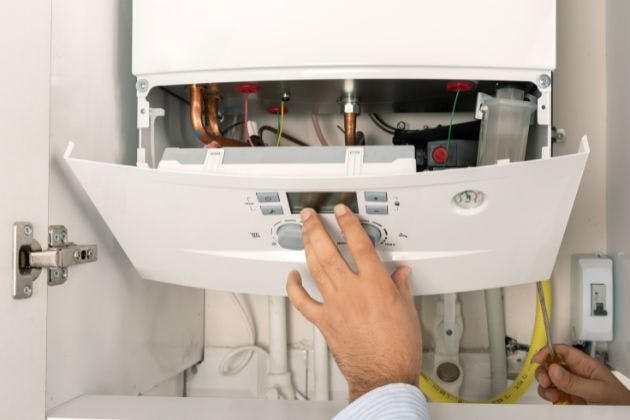
What boiler kettling actually is
Boiler kettling is the term for a loud rumbling, bubbling or banging noise that usually comes from the boiler itself. Many homeowners say it sounds like a kettle boiling hard on the hob.
The noise is usually caused by water heating unevenly inside the heat exchanger, often because something is restricting the flow of water. Instead of a smooth transfer of heat, you get localised boiling, steam bubbles and vibration that turns into that familiar rumble.
Kettling can affect both older and newer boilers, and while the boiler may still seem to work, running it like this for long periods can shorten its life and in some cases lead to breakdowns.
Typical causes of kettling in boilers
Several issues can lead to that kettle-like noise. Some are related to water quality, others to flow or system design.
Limescale on the heat exchanger – Hard water in areas around Ely, Littleport and Witchford can leave limescale deposits inside the boiler, especially on the heat exchanger. This creates hot spots that make the water boil noisily.
Sludge and debris in the system – Rust, dirt and magnetite sludge can build up in radiators and pipework. This restricts water flow and makes the boiler work harder, increasing noise.
Restricted water flow – Partially closed valves, clogged filters, or blockages in the pipework reduce flow, which encourages kettling.
Pump issues – An undersized, failing or incorrectly set pump may not move water around the system properly.
System design or oversizing – A boiler that is too powerful for the system, or poor pipework design, can also lead to noisy operation.
In many homes, there is a combination of these problems, especially where the system has not been regularly serviced or had any water treatment.
Safe checks you can do as a homeowner
There are a few simple checks you can carry out yourself to gather useful information and sometimes reduce the noise. Always put safety first, and if in doubt, switch the boiler off and call a Gas Safe registered engineer.
Check your boiler pressure
Most domestic boilers work best within a certain pressure range, usually shown on the front gauge and in the manual. As a general guide, around 1.0 to 1.5 bar when cold is common, but always follow your manufacturer’s instructions.
If the pressure is too low or too high, the boiler may struggle and make more noise. Only adjust the pressure using the filling loop if you are confident and understand the instructions. If it keeps dropping or rising, you need an engineer to investigate.
Listen for when the noise happens
Pay attention to whether the kettling happens when you run hot water, when the central heating is on, or both. Note how long the noise lasts and whether it gets worse as the boiler heats up.
This information helps a heating engineer quickly narrow down the likely cause, which can save time during a diagnostic visit.
Radiator bleeding and balancing basics
Cold spots on radiators and gurgling sounds can indicate trapped air or sludge. Bleeding radiators to remove air, then checking the boiler pressure again, can improve circulation slightly.
Balancing radiators by adjusting the lockshield valves can also help ensure an even flow around the system. However, this can be fiddly, and if you are unsure, it is better to have a professional adjust the system for you.
Essential safety points to keep in mind
While it is useful to do basic checks, it is crucial to know where to stop. Modern boilers are complex gas appliances, and DIY work on the boiler itself is not safe or legal unless you are properly qualified.
Never open the boiler casing or attempt to remove panels that require tools. Internally, there are gas, electrical and combustion components that should only be handled by a Gas Safe engineer.
If you notice a smell of gas, visible leaks, scorching, or the boiler repeatedly shuts down with error codes, switch the boiler off and contact a Gas Safe registered engineer immediately. Do not attempt to reset and restart it over and over.
How professionals usually tackle boiler kettling
Once an engineer has diagnosed the cause, there are several ways they may deal with kettling and help protect the system for the future.
System cleaning and water treatment
If limescale or sludge is behind the noise, a system flush or powerflush may be recommended. This involves circulating cleaning chemicals, sometimes with specialist flushing pumps, to break down and remove deposits from radiators, pipework and the boiler.
After cleaning, the engineer will typically add inhibitor chemicals to the system water to slow down corrosion and sludge buildup. They may also suggest additional water treatment options, such as a magnetic filter or scale reducer, especially in hard water areas.
If you would like more details on this, have a look at your local engineer’s dedicated water treatment services page for what is possible in your area.
Adjustments, repairs and servicing
Where flow issues are related to the pump, valves or controls, your engineer may reset, repair or replace these components. In some cases, small pipework alterations or changes to boiler settings can also make a big difference.
Regular boiler servicing helps pick up early signs of kettling, such as minor temperature fluctuations, dirty filters or small leaks. If you have not had a service in the last year, booking one can be a good way to get ahead of potential problems. You can read more on typical checks carried out on boiler service visits.
If your boiler has already been damaged or is locking out due to the noise, your engineer may categorise this as a repair visit. In that case, it is worth checking what is covered under local boiler repair services.
Living with a noisy boiler in Ely, Littleport or Witchford
If you are in Ely, Littleport, Witchford or the surrounding areas and your boiler has started to sound like a kettle, do not ignore it and hope it will go away. Kettling is often a sign of treatable issues that will only get worse if left.
Make a note of the noise, check your pressure, and bleed radiators if you are comfortable doing so. After that, it is time to bring in a professional who can work safely on gas and tackle the root cause.
For friendly, expert help with boiler kettling, water treatment, repairs or servicing, contact BEACH PLUMBING AND HEATING LIMITED to book a diagnostic visit on 07455158585.