If your boiler pressure keeps dropping back into the red, it’s more than just a minor annoyance. This repeated loss of pressure usually signals a leak or fault somewhere in your heating system. Left unchecked, it can cause your boiler to stop working properly, leaving you without heating or hot water when you need it most. Ignoring the issue can also lead to more serious damage and costly repairs down the line. It’s important to identify the cause early and get a professional to diagnose and fix the problem to keep your home warm and comfortable.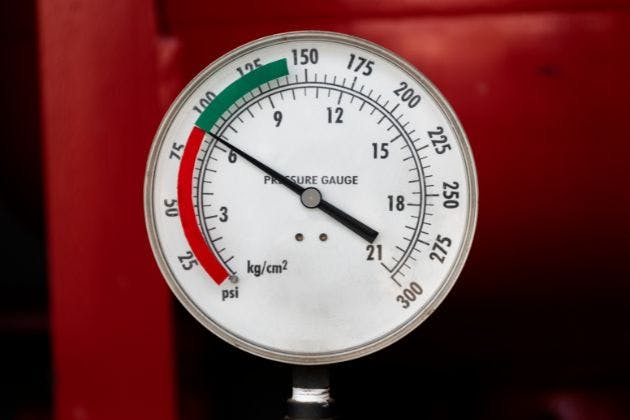
Normal boiler pressure explained
Most modern combi and system boilers should sit at around 1.0 to 1.5 bar when the system is cold. You can see this on the pressure gauge, usually on the front of the boiler or just underneath.
When the heating is on, and the water inside the pipes gets hot, the pressure will normally rise to around 1.5 to 2.0 bar. A small rise like this is expected. The time to worry is when the gauge keeps dropping below 1.0 bar, or you have to top it up every few days.
Does low boiler pressure stop heating?
If the pressure falls too far, your boiler may lock out to protect itself. That often means no heating and no hot water until the pressure is restored. Even before it locks out, very low pressure can make radiators slow to heat or patchy in temperature.
If you have topped the pressure up once after bleeding radiators and it then stays stable, that is usually fine. If you are refilling again and again, there is almost always an underlying issue that needs checking.
Common reasons boiler pressure keeps dropping
There are a handful of issues that cause most pressure problems. Understanding them can help you work out whether it is a one-off or a sign of something more serious.
Small leaks in the system such as pipe joints, valves or radiators losing water over time
Faulty pressure relief valve (PRV) letting water discharge out of the system
Expansion vessel problems causing pressure swings when the heating is on
Recent radiator bleeding removing trapped air and lowering pressure once
Filling loop issues such as a valve not fully closed, letting pressure drift
Small system leaks
Slow leaks are one of the most frequent causes of falling boiler pressure. They might be at radiator valves, pipe joints under floors, or even inside the boiler casing itself. Because they are often small, you may not see obvious puddles.
Over time, even a tiny drip will let enough water escape to drop the pressure. If you top up the boiler and it is back down within days or a week, a leak somewhere is very likely.
Can a leak be hidden?
Yes. Pipework buried in walls or under floors can leak without obvious signs. You might only notice small marks on ceilings below, slightly warped skirting boards, or a musty smell.
In flats, leaks can show up in a neighbour's ceiling rather than your own. If pressure keeps dropping and you cannot see any damp, a Gas Safe engineer can test sections of the system and help track the leak down.
Faulty pressure relief valve (PRV)
The PRV is a safety valve that opens if pressure gets too high, releasing water through a copper pipe that usually terminates outside. If it is worn, dirty or has had debris trapped in it, it may not reseal properly.
The result is a slow but constant discharge of water, and your system pressure creeps down. In hard water areas, limescale can speed up wear on this and other valves, making them less reliable over time.
Expansion vessel issues
The expansion vessel gives your system room to expand as water heats up. If its internal air charge is lost or the diaphragm fails, the boiler has no cushion for that expansion.
You might notice the pressure is low when cold, then shoots up close to the red when the heating is running, sometimes causing the PRV to open. Once everything cools again, the system ends up below 1 bar and you are back to topping up.
Recently bled radiators
Bleeding radiators releases trapped air, which is helpful for uneven heating but it also lowers system pressure. It is common to need to top up the boiler afterwards.
If pressure only dropped once, right after you bled the radiators, and then stayed steady for weeks, it likely was just the air removal. If it carries on dropping, something else is going on.
Filling loop problems
The filling loop is the flexible hose or built-in connection you use to top up pressure from the mains. After use, both valves should be shut off fully. If one is left slightly open, it can slowly over-pressurise the system.
This can trigger the PRV to discharge, and when everything settles your gauge ends up low again. A faulty or incorrectly fitted filling loop can also allow pressure changes, so it is worth asking an engineer to check if in doubt.
Safe checks you can do at home
There are a few simple, safe checks you can carry out before calling an engineer. Never remove boiler casings or touch internal components unless you are qualified.
Look for damp patches around radiators, valves and visible pipework
Check the outside PRV pipe for signs of dripping or staining on the wall below
Note pressure cold vs hot and how fast it drops after topping up
If you live in a hard water area, limescale in the system can make valves stick or fail more quickly. Professional water treatment and scale reduction can help protect your boiler, valves and pipework over the long term. For more on this, see our Water Treatment page.
When to call a Gas Safe engineer
Repeated pressure loss is often a sign of a fault that needs professional attention. Do not keep topping the system up without getting the root cause checked, as too much fresh water can increase corrosion and sludge.
You should contact a Gas Safe engineer if:
Pressure drops daily or weekly, even after you have checked for obvious leaks
The boiler shows error codes related to pressure or lockouts
You see any water near electrical components or inside the boiler area
The outside PRV pipe is regularly dripping when the system is running
An engineer can test the expansion vessel, inspect the PRV, check the filling loop, and identify leaks that are not visible. If any pipework, valves or radiators are at fault, they can be repaired or replaced. For help with leaks and faulty valves, visit our Plumbing Services page.
Why does pressure rise when heating on?
It is normal for pressure to rise a little when the heating is on, because hot water expands. The expansion vessel is there to absorb most of that change so it stays within a safe range.
If the gauge races up close to the red every time the heating runs, or the PRV discharges, the expansion vessel or PRV may need attention. This is a job for a qualified heating engineer rather than a DIY fix.
Quick boiler pressure FAQ
Is it safe to top up boiler pressure myself?
Most manufacturers allow homeowners to top up pressure using the filling loop, as long as you follow the instructions in the manual and do not overfill. If you are doing it frequently, ask an engineer to investigate.
Can low boiler pressure cause damage?
Running for long periods with very low pressure can stress the boiler and pump, and may lead to lockouts. Fixing the underlying problem promptly helps avoid more costly damage.
Could hard water be affecting my boiler?
In hard water areas, limescale can build up inside boilers, valves and heat exchangers. This can cause sticking valves, overheating and reliability issues. Professional system flushing and water treatment can reduce these risks.
Need help with a boiler that keeps losing pressure?
If your boiler pressure keeps dropping and you are topping up more than once in a blue moon, it is time for a proper diagnosis. Beach Plumbing & Heating can trace leaks, repair faulty valves and PRVs, and check your expansion vessel and filling loop for faults.
We also offer water treatment options to help protect your heating system in hard water areas. To arrange a visit or talk through the problem, call Beach Plumbing & Heating on 01353362034, or get in touch via our Contact page today.
EndFragment